My research…
My research journey began with a fascination for masking and masquerade practices, sparked during travels where I encountered the variety of ways people use masks to express identity, enact ritual, and negotiate social life. This curiosity led me to pursue a Master’s degree exploring masking practices in depth, and subsequently to doctoral research in the Sursurunga region of southern New Ireland, Papua New Guinea.
My PhD focused on two locally present masking traditions, the tubuan and the kipong, as well as the historical female puberty rites of the karuka house. Through ethnographic fieldwork, I examined these practices not only as cultural expressions but as lived experiences—how participants feel, sense, and move within these customs. I paid close attention to gendered dynamics and secrecy, exploring how these practices build social structures, empower certain actors, and interact with broader cultural change.
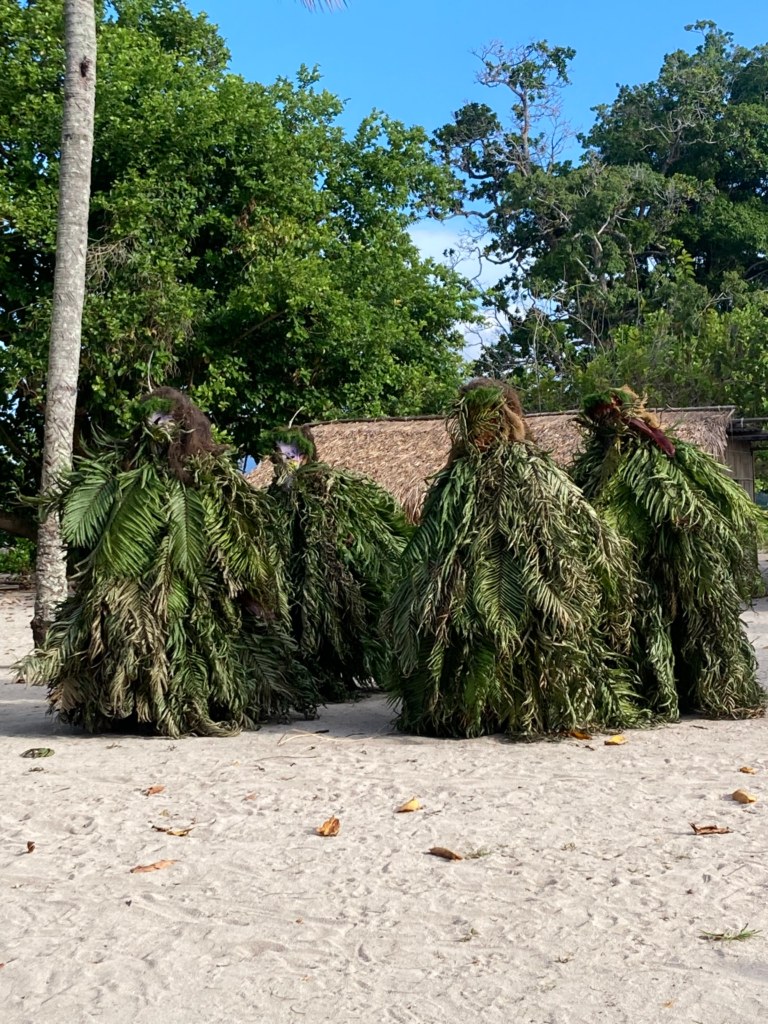
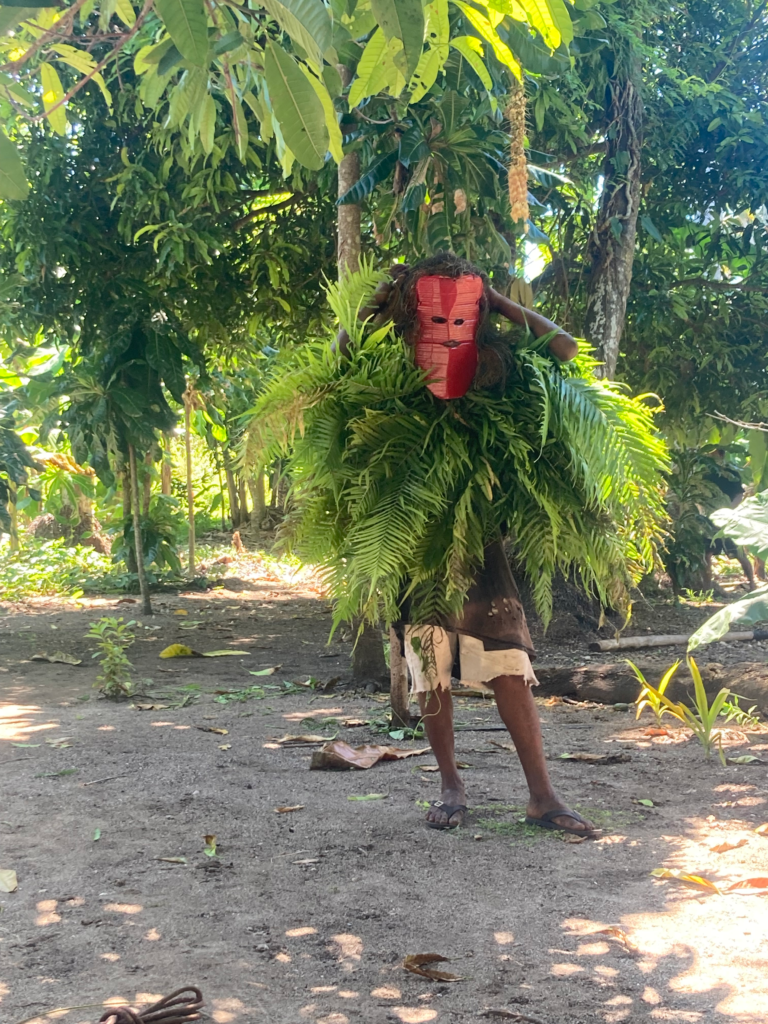
While my doctoral research was rooted in masking and kastom, it also opened up new questions about power, social norms, and the sensory dimensions of cultural practice. These threads have expanded my research interests to include women’s rights and gendered social dynamics at both local and international levels, as well as customary practices, ritual, and the ways sensory experience shapes social life. I continue to explore how these intersecting areas illuminate the connections between culture, power, and lived experience.
Through this work, I aim to engage with research that is both deeply contextual and broadly comparative, whether in academic, public, or applied settings. I am particularly interested in projects that explore how social structures, traditions, and sensory practices intersect with questions of gender, power, and social change around the world.
The Methods:
Anthropology and Ethnography
Anthropology is the study of people, cultures, and social life—how humans make meaning, organize themselves, and experience the world. Central to this work is ethnography: a method that combines long-term engagement, careful observation, and in-depth conversations to understand how people live, think, and relate to one another from the inside.
Ethnography is not just about documenting customs or behaviours; it’s about attending to context, relationships, and lived experience. It emphasizes listening as much as observing, and considers both the explicit and subtle ways that culture shapes everyday life. For example, rituals, masking practices, or even the ways people navigate social hierarchies can reveal deeper dynamics of power, belonging, and identity.
By grounding research in lived experience, anthropology and ethnography offer tools for understanding complex social, cultural, and organizational challenges. This perspective can inform work in a wide range of contexts, from academic scholarship to museum curation, public programming, nonprofit initiatives, or any setting where understanding people and culture is key.
Check out my work….
Boiteau, Isabelle A. 2025. Masking Practices and Kastom in Southern New Ireland, Papua New Guinea: Felt experience and identities. https://ddd.uab.cat/record/309195
Boiteau, Isabelle. 2025. Smell and the not-quite human: the olfactory scaffolding behind social structures in southern New Ireland, Papua New Guinea. The Senses and Society, 1-11. https://www.tandfonline.com/doi/abs/10.1080/17458927.2025.2586453
Boiteau, Isabelle. 2025. Viendo el tubuan actuar: el papel de la experiencia sentida en una práctica de enmascaramiento en Papua Nueva Guinea. Quaderns de l’Institut Català d’Antropologia, 41(2), 212-223. https://publicacions.antropologia.cat/quaderns/article/view/551